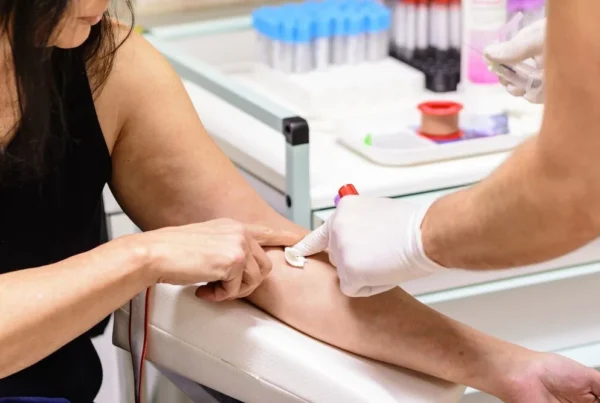


Private blood testing has quietly become one of the most in-demand private health services in the UK, and community pharmacies are perfectly placed to deliver it. No hospital car park, no six-week GP wait, no explaining yourself to a receptionist. Just a trained phlebotomist, a private room, and a fast result pathway. But who actually walks through the door for a private phlebotomy appointment? Understanding the real patient mix helps pharmacies plan staffing, training, and service design properly, rather than assuming it’s a niche add-on.
Health-conscious patients wanting proactive screening
A large and growing group are patients who aren’t unwell at all. They’ve read about a private blood test online, seen an at-home testing kit advertised, or simply want an annual health MOT, cholesterol, liver function, thyroid, vitamin D, iron levels, without waiting for a GP to agree it’s clinically necessary. We get a lot of these at Makewell. These patients are often digitally engaged, comfortable booking online, and willing to pay for convenience and speed. For a pharmacy, they’re typically the easiest group to serve, since the tests requested are standard panels rather than anything requiring complex clinical interpretation.
Patients on private hormone therapy needing routine monitoring
HRT, testosterone replacement therapy, and other private hormone treatments have seen a sharp rise in the UK, largely delivered through private clinics and online prescribers. Nearly all of these pathways require regular blood monitoring, oestradiol, testosterone, PSA, full blood count, often every three to six months. Many private clinics don’t offer in-house phlebotomy, and NHS GPs are increasingly reluctant to take on monitoring for privately prescribed treatment. That leaves patients searching for somewhere convenient and clinically credible to have bloods drawn, with results sent straight to their private prescriber. This is a genuinely recurring, loyal patient group rather than a one-off visit.
Fertility and hormone-tracking patients
Patients undergoing private fertility investigations or treatment, whether self-funded IVF, hormone-cycle tracking, or pre-conception health checks, often need blood draws timed precisely to their cycle, sometimes at short notice. A community pharmacy offering flexible, walk-in-friendly appointments (rather than a booked slot three weeks away) becomes genuinely valuable here, particularly for time-sensitive hormone panels like FSH, LH, and AMH.
Corporate and occupational health clients
Employers increasingly offer private health screening as part of workplace wellbeing packages, and occupational health providers need routine bloods for pre-employment checks, health surveillance, or return-to-work assessments. This is a B2B opportunity as much as a B2C one, a pharmacy that can offer on-site or fast-turnaround corporate blood testing has an entirely different, higher-volume revenue stream available, separate from individual walk-ins.
Patients referred by private GPs, clinics, and insurers
Private GP practices, aesthetics clinics, weight-management clinics (particularly those prescribing GLP-1 medications requiring baseline and monitoring bloods), and private medical insurers frequently don’t have phlebotomy capacity in-house. They refer patients out, and a pharmacy with a reliable, professional private phlebotomy service becomes a natural referral partner. This is where a formal referral relationship, rather than passive footfall, tends to deliver the most sustainable volume.
Patients avoiding NHS wait times or seeking privacy
Some patients simply don’t want to wait weeks for a routine NHS blood test, or would rather not discuss the reason for a test with their usual GP, sexual health screening, general anxiety about symptoms, or a family history prompting private checks. Discretion, speed, and a non-judgemental environment matter as much as the clinical service itself here.
Elderly and less mobile patients wanting local convenience
For older patients or those with mobility challenges, a local pharmacy is often significantly easier to reach than a hospital phlebotomy department or a GP surgery on the other side of town. A private service with flexible appointment times can serve this group well, particularly for routine monitoring bloods tied to long-term conditions managed privately.
What this means for pharmacies considering the service
The patient base for private phlebotomy isn’t a single niche, it spans health-conscious self-payers, recurring hormone-therapy patients, time-sensitive fertility patients, corporate clients, and referral partnerships with private clinics. Getting the service right depends on properly trained staff, clear governance around consent and sample handling, and referral relationships that turn one-off visits into a steady, repeat patient base.
If you want help setting up your private phlebotomy service please get in touch with us at Natalie@ecgtraining.co.uk